
English| EUR
Suggested for you
More currencies
Choose a language
When organizing an itinerary in the Arenal region, travelers frequently search for a definitive rio celeste vs la fortuna waterfall guide. While both sites feature distinct natural environments, their physical demands and regulations differ significantly. This overview clarifies access requirements, topography, and swimming rules to aid your planning process.
Quick answer
The primary factor in the rio celeste vs la fortuna waterfall decision is interaction: La Fortuna permits swimming after a steep descent, while Rio Celeste strictly prohibits entering the water to protect its mineral balance. Accessing the blue river requires a 12 USD conservation fee plus tax and navigating 250 steps within Tenorio Volcano National Park.
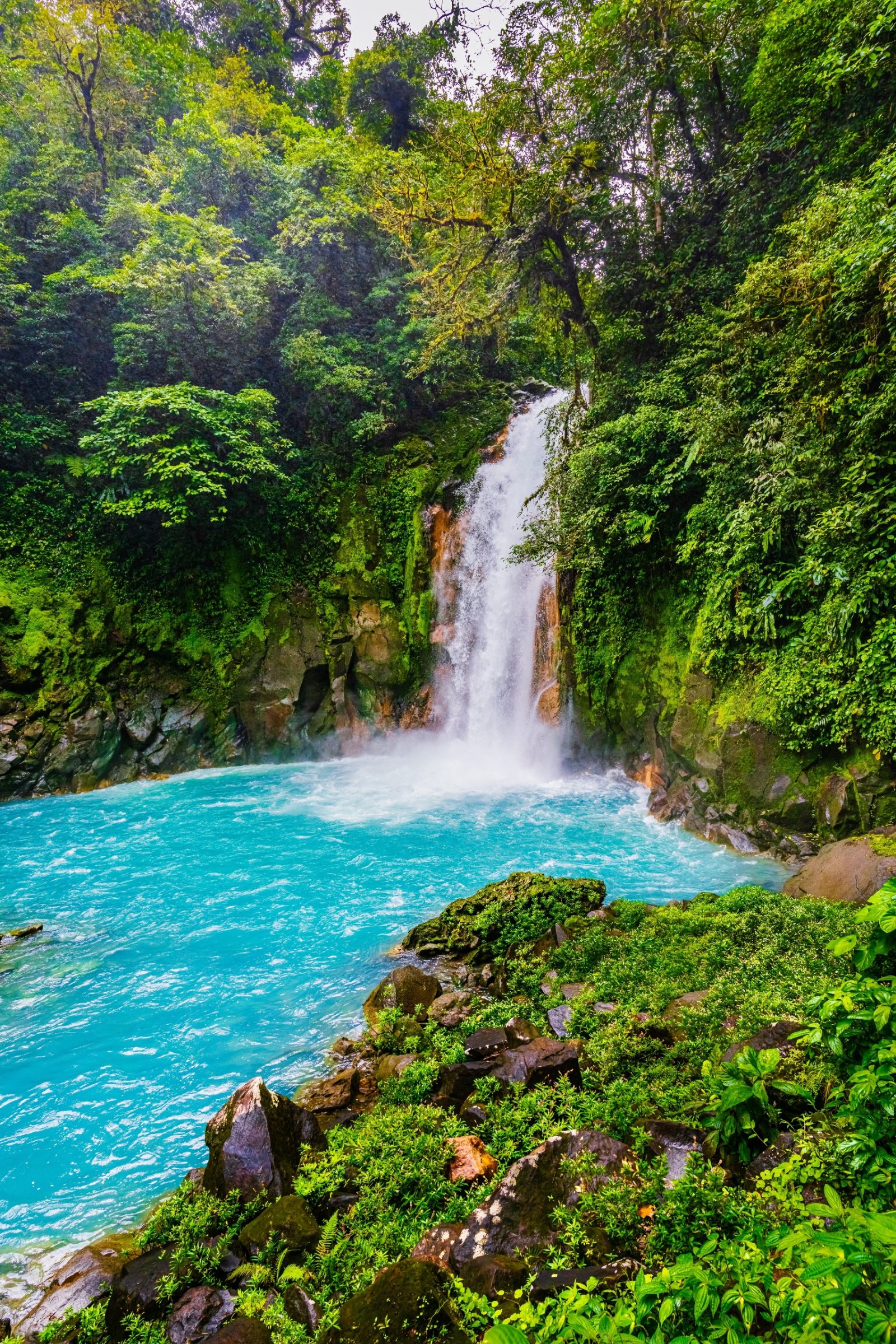
The striking cyan hue of the water in Tenorio Volcano National Park is not a trick of pigmentation, but an optical illusion caused by aluminosilicate particles suspended in the river. This phenomenon often drives the initial interest when visitors research rio celeste vs la fortuna waterfall. While they both exist within a couple hours of the same central tourist hub, the experiences cater to different types of travelers. Catarata La Fortuna drops 70 meters out of a dense jungle cliffside directly into a wide, turbulent pool where visitors can wade and cool off. In contrast, the environment at Tenorio Volcano National Park prioritizes preservation over recreation. The ecosystem surrounding the blue river requires strict adherence to designated paths, meaning visitors observe the natural anomaly from a structured viewpoint rather than immersing themselves in it. Evaluating a Costa Rica waterfall comparison requires understanding the distinct topographies of each site. Reaching the famous blue cascade involves traversing a primary rainforest trail that spans roughly six kilometers round trip, culminating in a steep descent via a staircase. The path can become highly irregular during periods of heavy precipitation, demanding sturdy footwear and careful navigation over exposed roots and mud. Alternatively, the descent to the base in the town of La Fortuna involves a constructed metal and concrete staircase. While the climb back up is physically demanding, the footing remains consistent and predictable. Travelers with mobility concerns or young children must weigh the unpaved nature of the national park trails against the sheer cardiovascular exertion of the urban-adjacent staircase. Beyond the physical hikes, the geological features shape the overall visit. The trek along the Celeste river continues past the main cascade to Los Teñideros, the exact convergence point where two clear streams mix to create the signature azure color. This extended observation hike offers dense botanical diversity and frequent wildlife sightings, drawing hikers interested in geology and forest ecology. Conversely, the secondary destination near Arenal operates more as an aquatic recreation site, favored by those seeking a brief, intense hike followed by a prolonged swim. Determining the better fit ultimately depends on whether your priority is observing a unique geological anomaly or engaging directly with the water. By defining your preferred activity level and environmental interests, deciding on rio celeste vs la fortuna waterfall becomes a straightforward matter of aligning the location’s physical reality with your itinerary.
“The striking cyan hue of the water in Tenorio Volcano National Park is not a trick of pigmentation, but an optical illusion caused by suspended aluminosilicate particles.”
Entrance fees for Rio Celeste are regulated by the Tenorio Volcano National Park, while La Fortuna Waterfall is managed privately and maintains a different pricing structure.
Verdict: A typical adult pays 12 USD for Rio Celeste, though visitors should note that national park fees are subject to local tax additions.
Tenorio Volcano National Park, home to Rio Celeste, maintains consistent daily operating hours. In contrast, La Fortuna Waterfall typically operates with a different schedule, requiring visitors to verify separate access times for each site.
To experience Rio Celeste with fewer crowds, the best arrival window is 08:00–09:00, which avoids the congestion caused by tour buses arriving later in the day. While La Fortuna Waterfall experiences steady visitor flow throughout the day, Rio Celeste remains sensitive to arrival timing due to its location within Tenorio Volcano National Park.
—
Visiting midweek allows for a quieter trail experience before midday tour groups arrive.
Warm, 24°C–28°C
Expect higher visitor volumes as this period aligns with peak tourism months in Costa Rica.
Humid, 22°C–26°C
Trails can be muddy, but visitor numbers are typically lower, especially during the shoulder months of May and October.
Verdict: The best time to visit is midweek between 08:00–09:00 during the months of May or October to avoid peak tour bus congestion.
La Fortuna Waterfall is located minutes from La Fortuna town center, while Rio Celeste is situated within Tenorio Volcano National Park, Bijagua, Alajuela, requiring a significantly longer journey.
Route 142 and Route 6 to Bijagua
Private transfer from La Fortuna
Route 142 toward La Fortuna Waterfall entrance
Local taxi from La Fortuna town
For Rio Celeste, visitors must navigate to the Tenorio Volcano National Park entrance in Bijagua. Dedicated parking is available on-site, though early arrival is recommended due to travel distance from La Fortuna.
Preparing for these two distinct locations requires planning for deep mud, steep stairs, and strict park regulations.
Everything you need to know about rio celeste vs la fortuna waterfall
You do not necessarily have to choose between them, but they offer distinct experiences based on your travel goals. Comparing rio celeste vs la fortuna waterfall often comes down to your preference for turquoise river hues versus a powerful, singular cascade. Each provides a unique connection to the volcanic terrain of the region.
The trail at Rio Celeste leads to the famous waterfall and blue lagoon, requiring a hike of moderate intensity. In contrast, the La Fortuna site involves a steep descent and ascent via stairs to reach the base of the pool. Choosing between a rio celeste vs la fortuna waterfall trek depends on your stamina and desire for varied scenery.
To avoid heavy crowds, the best arrival window for Tenorio Volcano National Park is 08:00–09:00. While both sites benefit from early starts, planning your rio celeste vs la fortuna waterfall itinerary requires accounting for travel time between the two distant locations. Early morning arrival consistently ensures the best experience before tour bus congestion begins.
Accessibility is a major factor when evaluating rio celeste vs la fortuna waterfall requirements. Accessing the waterfall at Rio Celeste involves 250 steps to reach the viewing platform. Ensure you are prepared for this physical activity regardless of which destination you choose.
The conservation fee for Tenorio Volcano National Park is 12 USD per person, plus tax. This fee supports the maintenance and protection of the Tenorio Volcano National Park, Bijagua, Alajuela, Costa Rica environment. Fees for other attractions may vary, so check official sources when planning your budget.
While technically possible for some, visiting both in one day is difficult due to the driving distance between the locations. Most travelers prefer dedicating a full day to each site to properly enjoy the tropical rainforest and geological features. If you are debating the rio celeste vs la fortuna waterfall experience, prioritize the one that aligns best with your existing itinerary.
Rio Celeste Day Trip from La Fortuna
Read more Tickets & toursRio Celeste Full Day Tour from La Fortuna
Read more GuideHow Far is Rio Celeste from La Fortuna
Read more Tickets & toursRio Celeste Tubing from La Fortuna
Read more GuideRio Celeste Hike from La Fortuna
Read more GuideHow to Get to Rio Celeste from La Fortuna
Read more